How to Choose a Neck Pillow for Sleeping on a Plane
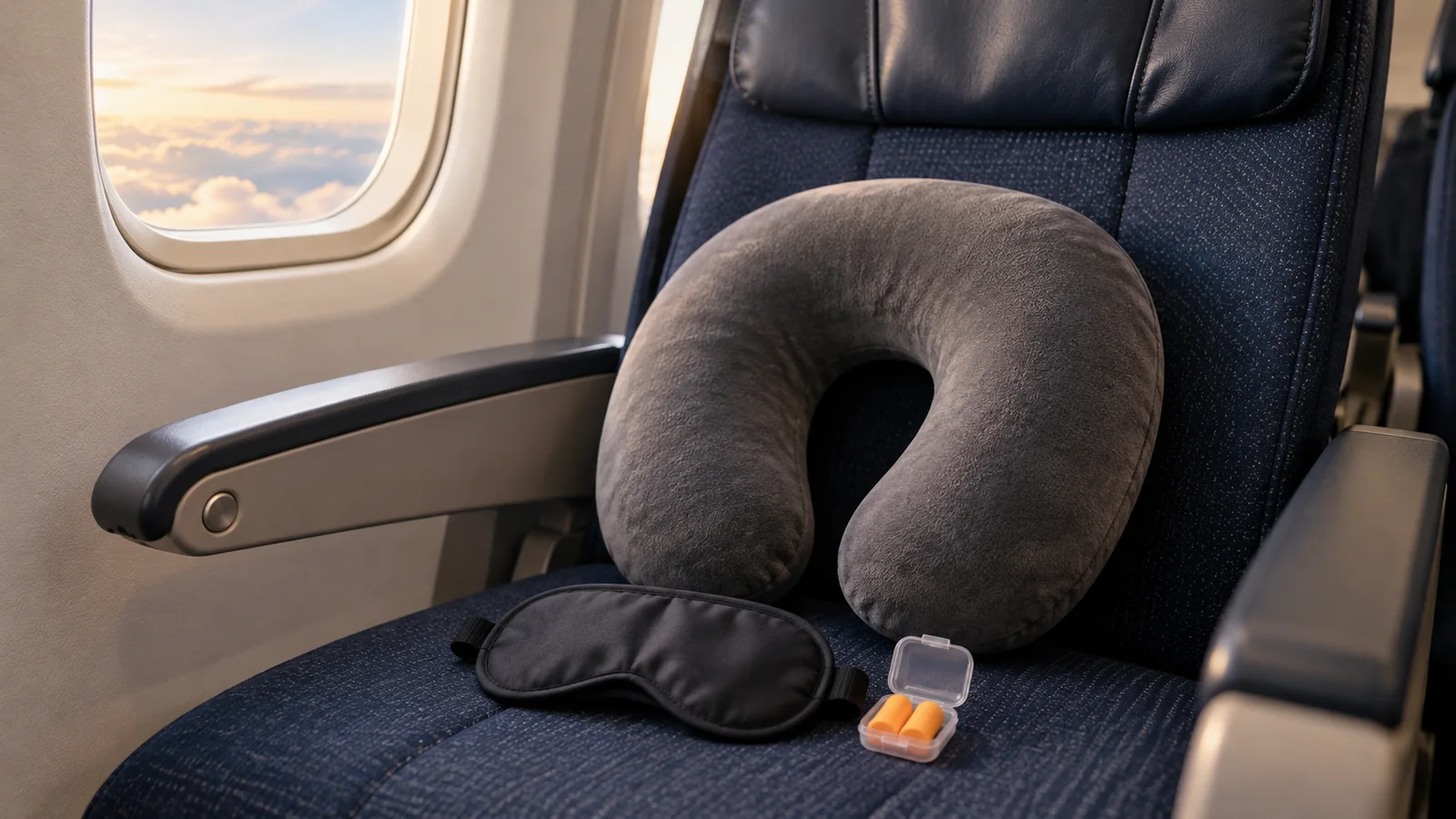
To choose a neck pillow for sleeping on a plane, start with how your head moves when you relax in an upright seat. Some travelers tend to lean sideways, while others notice their head falling forward. The pillow should address the movement that matters most without squeezing the neck or pushing the head uncomfortably away from the seatback. Check the height of its side sections, the thickness behind the neck, the size of its opening and how it fits against the airplane headrest. A U-shaped memory foam pillow may be a useful option, but material alone does not guarantee a good fit or comfortable sleep.
ENNASI offers travel neck pillows and U-shaped memory foam travel sets. Its travel neck pillow collection provides a starting point for readers who want to compare shapes and accessories after understanding these seat-specific checks.
Why Sleeping Upright on a Plane Changes Pillow Support
A bed pillow and an airplane neck pillow work in different conditions. When lying down, much of the head’s weight is supported by a mattress and pillow. In an upright or partly reclined airline seat, the head can move relative to the shoulders as the traveler relaxes. The seatback may support the rear of the head, but it does not necessarily control side tilt or forward drooping.
The right travel pillow therefore depends on the combination of the person, the pillow and the seat. The same U-shaped pillow can feel different against a high headrest, a firm seatback or a seat that reclines only slightly. Support at the sides and behind the neck should be considered separately.
| What happens during rest | What to check in the pillow | What else matters |
|---|---|---|
| Head tilts toward one shoulder | Side-wall height, contact position and resistance to slipping | Shoulder shape and seatback support |
| Head drops forward | Whether the design actually offers front support | Front opening, pressure and breathing comfort |
| Head is pushed forward by the pillow | Rear thickness and placement | Seatback and headrest geometry |
Match the Pillow to How Your Head Moves During Sleep
When Your Head Tilts Sideways
If sideways leaning is the main problem, compare where the pillow’s side sections touch the neck and lower head. A taller wing is not automatically better: it may interfere with the jaw or shoulder, while a shorter one may fail to meet the head where support is needed. Try the pillow in a seated posture and see whether the support is available when the head relaxes, rather than only while holding it upright.
For a classic U-shaped travel pillow, also check whether the sides move apart under pressure and whether the product stays in place without constant adjustment. These characteristics vary by design and size; the U shape alone is not a performance specification.
When Your Head Falls Forward
A conventional U shape may leave the front of the neck relatively open. If forward head drop is the main issue, inspect the actual front-end construction, closure and intended wearing orientation. Some travel-pillow designs include additional front or wraparound support; others do not. Never assume that a particular ENNASI U-shaped model has a chin rest or special front-support mechanism unless the individual product documentation confirms it.
Any front section should be comfortable and should not compress the throat or interfere with breathing. A pillow should not be treated as a medical immobilization device, and a claim that it prevents neck pain would require evidence beyond its shape.
Check Neck Fit, Pillow Height and Seat Compatibility
Before choosing a neck pillow for airplane sleeping, check fit while sitting against a high-backed chair similar to an aircraft seat. First, place the pillow according to its design instructions. The opening should accommodate the neck without excessive pressure, and the rear section should not force the head noticeably forward. Next, relax the head in the direction it naturally tends to move. The pillow should meet that movement without creating a new uncomfortable position.
Five useful checks are whether the pillow stays in place, whether the side support meets the head, whether the rear thickness conflicts with the headrest, whether any fastening device is comfortable, and whether glasses or headphones interfere with the intended fit. A photo of a pillow on a table cannot answer these questions.
For example, ENNASI lists a portable U-shaped airplane travel pillow within its travel-product records. Its product description establishes the U-shaped memory foam travel format, but the actual wearer fit and seat compatibility still need to be evaluated for the specific version.
How Do Memory Foam, Cover Fabric and Travel Accessories Matter?
Foam Support and Rebound
Memory foam can change shape under pressure and recover afterward, but the feel depends on the pillow’s geometry and material formulation. A label saying “memory foam” does not establish a universal firmness, density, rebound time or medical benefit. Compare how the pillow supports the head during use, then consider its recovery and packed size if it will be carried in a bag.
Eye Masks, Earplugs and Covers
A travel set may address more than one source of discomfort. The pillow provides physical contact and support; an eye mask blocks some light; earplugs may reduce perceived environmental noise when used appropriately. These are distinct functions. Accessories cannot correct a poorly fitting neck pillow.
One relevant ENNASI product is the U-shaped memory foam neck support pillow with earplugs and an eye mask. Its listed product configuration is a sensible example of a travel set. Readers should still confirm the exact included accessories, covering material and care instructions for the version being purchased.
How to Use a Neck Pillow in an Airplane Seat
Start with the wearing direction specified for the particular pillow rather than assuming that every U-shaped model must face the same way. Sit back, arrange the pillow so it does not crowd the jaw or throat, and assess its support in a relaxed posture. If the seat reclines, check the fit again because the relationship between the pillow and headrest may change.
A neck pillow is a comfort accessory, not part of the aircraft restraint system. It should not obstruct the seatbelt, interfere with the ability to follow crew instructions or be treated as a substitute for safe seating practices. If the fit causes pressure, restricted movement or discomfort, adjust or stop using it.
A Final Checklist for Airplane Sleeping
- Head movement: Is sideways tilt or forward drooping the main concern?
- Support: Does the pillow contact the head and neck where it is actually needed?
- Fit: Is the opening comfortable, without pressure around the throat?
- Seat compatibility: Does the back section work with the intended headrest?
- Material and cover: Are the touch, firmness and care instructions suitable?
- Travel accessories: Are a storage pouch, mask or earplugs useful and actually included?
A well-chosen airplane travel neck pillow is the one that fits the person’s seated posture and the seat environment, not simply the model with the thickest wings or the most accessories. ENNASI’s travel range gives retail and private-label buyers product forms to compare. For a specific product program, discuss your travel pillow requirements with ENNASI, including shape, sizes, cover material, accessories, packaging and order quantity.